







Percussion


Read more Percussion
Read more Percussion
Percussion
Percussion instruments cover a wide range of percussion instruments, such as claves, tambourines, xylophones, bongos, cowbells, triangles, and congas.
Percussion thus includes many different types of percussion instruments, and the materials vary from wood and metal to plastic.
Percussion instruments are used in classical and rhythmic genres, especially in Latin American music, to support the music with a rhythm. The choice of percussion instrument depends on the music genre it will be used for.
SoundStoreXL offers a wide selection of percussion instruments of all kinds. If you have questions, feel free to contact our customer service, and we will gladly advise you on your choice of percussion instrument.
See our large selection of percussion here in the online shop.
SoundStoreXL.com offers price matching, so with us, you will find your new percussion instrument at the sharpest online price.
Read more about percussion and percussion instruments on Wikipedia: click here
The percussion section in a symphony orchestra
The percussion section is the largest in the symphony orchestra. Percussion instruments include any instrument that produces a sound when struck, shaken, or scraped. It is not easy to be a percussionist because it requires a lot of practice to hit an instrument with the right strength, in the right place, and at the right time. Some percussion instruments can be tuned and play different notes, such as the xylophone, timpani, or piano, while others cannot be tuned and do not have a specific pitch range, such as the bass drum, cymbals, or castanets. The role of percussion instruments in a symphony orchestra is to maintain the rhythm, create special sounds, and add excitement and color to the composition. Unlike most of the other musicians in the orchestra, a percussionist will typically play several different instruments in one piece of music. The most common percussion instruments in the orchestra include:
Timpani:
It is a large copper kettle with drumheads made of calfskin or plastic stretched over the top. Timpani are tuned instruments, which means they can play different notes. The timpani player can change the pitch by tightening or loosening the drumhead, which is attached to a foot pedal. The timpani is a central part of the percussion section because it supports rhythm, melody, and harmony. Most orchestras have fire timpani in different sizes and tuned in different pitch ranges, and they are usually played by a musician who strikes the drumhead with felt mallets or drumsticks.
Xylophone:
The xylophone originally comes from Africa and Asia, but has a Greek name that means "wood sound". The modern xylophone has wooden keys arranged like those on a piano, which the musician strikes with a small mallet. One can change the expression of the tone by using different types of mallets (hard or soft) and by striking the keys in different ways. Behind the keys, there are some metal tubes that make the sound vibrate. This gives the xylophone its bright bell-like sound.
Cymbals:
Cymbals are the orchestra's largest sources of noise. They are usually two large metal discs, typically made of spun bronze. Cymbals come in a range of sizes, from quite small to very large. The larger the cymbal, the deeper the sound it produces. Cymbals can be used to create or support drama and tension, and to accentuate rhythm or create subtle sound effects. You can play cymbals either by striking them against each other, or you can use sticks, mallets, or brushes to strike one or both cymbals.
Triangles:
You have probably played a triangle at some point. It is a small metal rod shaped like a triangle and produces a ringing sound when you strike it. There are many sizes of triangles, and each has its own tone. You play the triangle by holding it on a string and striking it with a metal rod. The size and thickness of the rod can change the sound that the triangle makes.
Snare Drum and Bass Drum:
The snare drum is a small drum made of wood or brass with drumheads made from calfskin or plastic stretched over both ends of a hollow cylinder. It has a set of wire strands stretched over the bottom head (the snares), which gives the snare drum its unique "rattling" sound when the drum is struck. There is a small switch on the side of the drum that allows you to turn the snares on or off, so it can be adjusted to the rest of the composition of the musical piece. The snare drum is often used in military music and is a central part of a marching band. You play the snare drum by striking the top with drumsticks, mallets, or brushes.
The bass drum is the largest member of the percussion family and therefore produces the deepest sounds. The bass drum is built like a very large snare drum, but without snares; it is also an untuned instrument. You play the bass drum by striking either the drumhead with drumsticks that have large soft heads, often covered with sheep skin or felt. It can produce a wide range of sounds from roaring thunder to the softest whisper.
Maracas:
Maracas come from Mexico. They are usually made of wood or plastic and shaped like an egg-shaped head on a handle. Inside the "egg head" are filled either dried seeds, beads, or small ball bearings, which give the instrument its distinctive rattling sound. The rattling sound depends on what they are made of and what they are filled with. To play them, you hold them in your hands and shake.
Gong:
The gong is a very large metal plate that hangs suspended from a metal rod. It resembles a cymbal and is also untuned, but is much larger and has a bulge in the center. To play it, you strike the center with a soft mallet. Depending on how hard you hit it, you can create a deep rumble or the softest shimmer of sound.
Chimes:
Chimes are metal tubes of varying lengths that hang side by side from a metal frame. When you strike the tubes with a mallet, they sound like the ringing bells of a church. Each metal tube has its own tone and pitch.
Castanets:
These small fun wooden instruments come from Spain and are used to punctuate music with a distinct click-clack sound. Castanets are made of two pieces of wood that are tied together. To play them, you hold them with your fingers and click the two pieces of wood against each other. In the orchestra, castanets are sometimes mounted on a piece of wood, and the percussionist plays them by striking them with their hands.
Is the classical piano a percussion instrument?
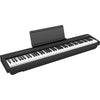
If you were to put the piano in a music box, experts disagree on whether the piano is a percussion or a string instrument. You play it by pressing its 88 black and white keys with your fingers, which suggests that it belongs in the percussion category. But the keys lift small hammers inside the piano that strike strings (in fact, the piano has more strings than any other string instrument), which produce the characteristic piano sound - which makes it a string instrument? What category do you think it belongs to? Regardless of which category it belongs to, there is no doubt that the piano has the greatest range of all instruments in the orchestra. It is a tuned instrument, and you can play many notes at once with both of your hands. In orchestral music, the piano usually supports the harmony, but it also has another role as a solo instrument, playing both melody and harmony.
